
INNOSPACE set new launch window from March 7 to March 21 (BRT) for the HANBIT-TLV first test flight from Brazil soil to verify the flight performance of the 15-ton thrust single stage hybrid engine.
SEJONG, South Korea (March 2, 2023) – INNOSPACE, a South Korean private spaceflight startup for small satellite launch vehicles, announced that it has set new launch window from March 7 to March 21 (Brasilia Time, BRT) for the HANBIT-TLV first test flight from Brazil soil to verify the flight performance of the 15-ton thrust single stage hybrid engine developed by INNOSPACE.
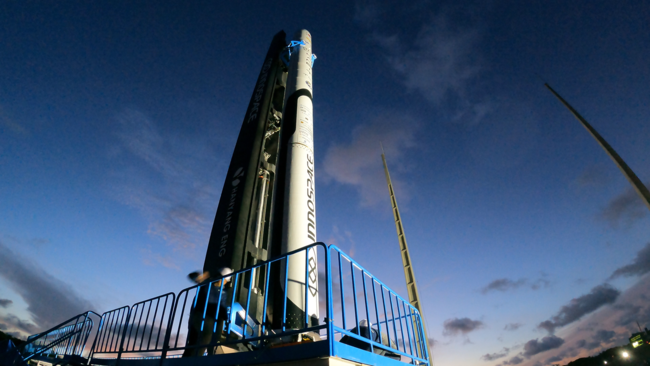
The final launch date and time will be decided after completing checkups for technical preparations and weather conditions in cooperation with the Brazilian Air Force and the Brazilian Department of Aerospace Science and Technology (DCTA). Due to the rainy season in Brazil, the weather conditions are expected to be one of the biggest concerns in determining them. HANBIT-TLV will lift-off from INNOSPACE’s own launch pad at the Alcântara Launch Center within the Brazilian Air Force facility which is considered as the one of the best launch sites in the world by reason of the closest to the equator.
The test launch was originally scheduled to launch in December 2022, but the initial launch attempt was called off due to an unexpected synchronization error between the safety management system of the launch center and the ignition system of the HANBIT-TLV. After found the system error, INNOSPACE and Centro de Lançamento de Alcântara (CLA) teams completed full checkups from transmissions of electrical signals to a synchronization program and confirmed that the systems operate with no issues.
“The first-stage rocket engine, which has the largest thrust and the most complicated structural system, is considered a core technology, and the performance verification test of a first-stage rocket engine is an important process to secure an original launch vehicle technology. As currently reached the engine flight test step after the in-house design and development of the rocket engine, assembly and manufacturing of the launcher, we endeavor to successfully launch HANBIT-TLV by more closely checking various factors such as technical preparations, facilities and weather conditions,” said Soo Jong Kim, CEO of INNOSPACE.
The HANBIT-TLV is to validate the first stage engine of HANBIT-Nano, which is a 2-stage small satellite launcher capable of carrying a 50kg payload. HANBIT-TLV is a 15-ton thrust single stage hybrid rocket with a height of 16.3m, 1-meter-diameter, and weight of 8.4-ton.
In addition, in accordance with the agreement signed with DCTA on April, the HANBIT-TLV will carry onboard the payload SISNAV, an inertial navigation system being developed by DCTA and other institutions despite a test flight. SISNAV has weight of 20kg and 310 × 400 × 280 mm3 in size.


 PREVIOUS