
INNOSPACE announced it adopted a methane engine alongside its hybrid engine for the upper stage of ‘HANBIT,’ advancing its strategy to commercialize tailored space transportation.
● Strengthening competitiveness in customized space transportation through engine diversification
● Achieved a 237-second long-duration firing time for a 0.4-ton methane thrust chamber assembly for kick-stage
● Conducting advanced hot-fire tests on the 3-ton methane thrust chamber assembly for the upper stage of ‘HANBIT-Nano’
SEJONG, South Korea (August 29, 2024) – INNOSPACE (KS: 462350), a South Korean commercial satellite launch vehicle, announced today that it has adopted a methane engine alongside its existing hybrid engine for the upper stage of the ‘HANBIT’ satellite launch vehicle, advancing its strategy to commercialize customer-tailored space transportation through rocket engine diversification.
INNOSPACE, which has secured its proprietary hybrid engine technology with safety and cost-effectiveness, plans to further enhance its space launch vehicle capabilities and customized launch service competitiveness by adopting methane engines. INNOSPACE particularly intends to actively use methane engines in launches that require multiple missions to achieve higher customer satisfaction.
When applied as an upper-stage engine, the methane engine has the advantage of accurately and efficiently deploying multiple satellites into different orbits using a single launch vehicle. The engine’s ability to re-ignite multiple times and precisely reaction control provides the technical solution needed to perform multiple launch missions, where the engine is turned on and off several times in space to deploy several satellites into the desired orbits. This capability is expected to play a crucial role in quickly responding to the increasing demand for constellation satellite launches and meeting various customer mission requirements.
Since 2022, INNOSPACE has achieved technical advancements by developing and testing its proprietary methane thrust chamber assembly, following over two years of preliminary technology research.
In May of this year, INNOSPACE successfully conducted hot-fire tests on a 0.4-ton thrust regenerative cooling methane thrust chamber assembly developed using metal 3D printing-based additive manufacturing technology, reaching a 237-second (3 minutes and 57 seconds) long-duration firing time and is intended for the kick-stage of the ‘HANBIT-Micro’ launch vehicle, which has a payload capacity of 170 kg. The kick-stage is an engine module used to accurately deploy satellites into their target orbits after the rocket’s second-stage engine separation in space.
Subsequently, INNOSPACE completed initial performance verification through combustion tests using the 3-ton class thrust methane chamber assembly development model (DM) for the upper stage of the ‘HANBIT-Nano’ satellite launcher starting in July. INNOSPACE is currently conducting further hot-fire tests to verify performances such as reliability and stability by applying miniaturization and lightweight design to the existing development model. Once the optimization of the development model is complete, INNOSPACE plans to finalize the development of the qualification model (QM) and flight model (FM) by November 2024.
“With the adoption of the methane engine, INNOSPACE expects to be able to offer either hybrid or methane engines, depending on the specific requirements of each launch mission, allowing us to provide customers with more flexible and efficient launch services. We will continue to develop optimized technologies to quickly respond to changes in the global space market and constantly strive for new market entry and sustainable growth,” said Soojong Kim, CEO of INNOSPACE.
INNOSPACE’s hybrid engine uses paraffin-based solid fuel and liquid oxygen, while the methane engine uses liquid methane and liquid oxygen as propellants. In Particular, the methane engine benefits from the use of Inconel material, known for its excellent heat resistance and durability, and employs metal 3D printing-based additive manufacturing, offering advantages such as reduced manufacturing costs and time, as well as the ability to create complex 3D structures and achieve lightweight designs.
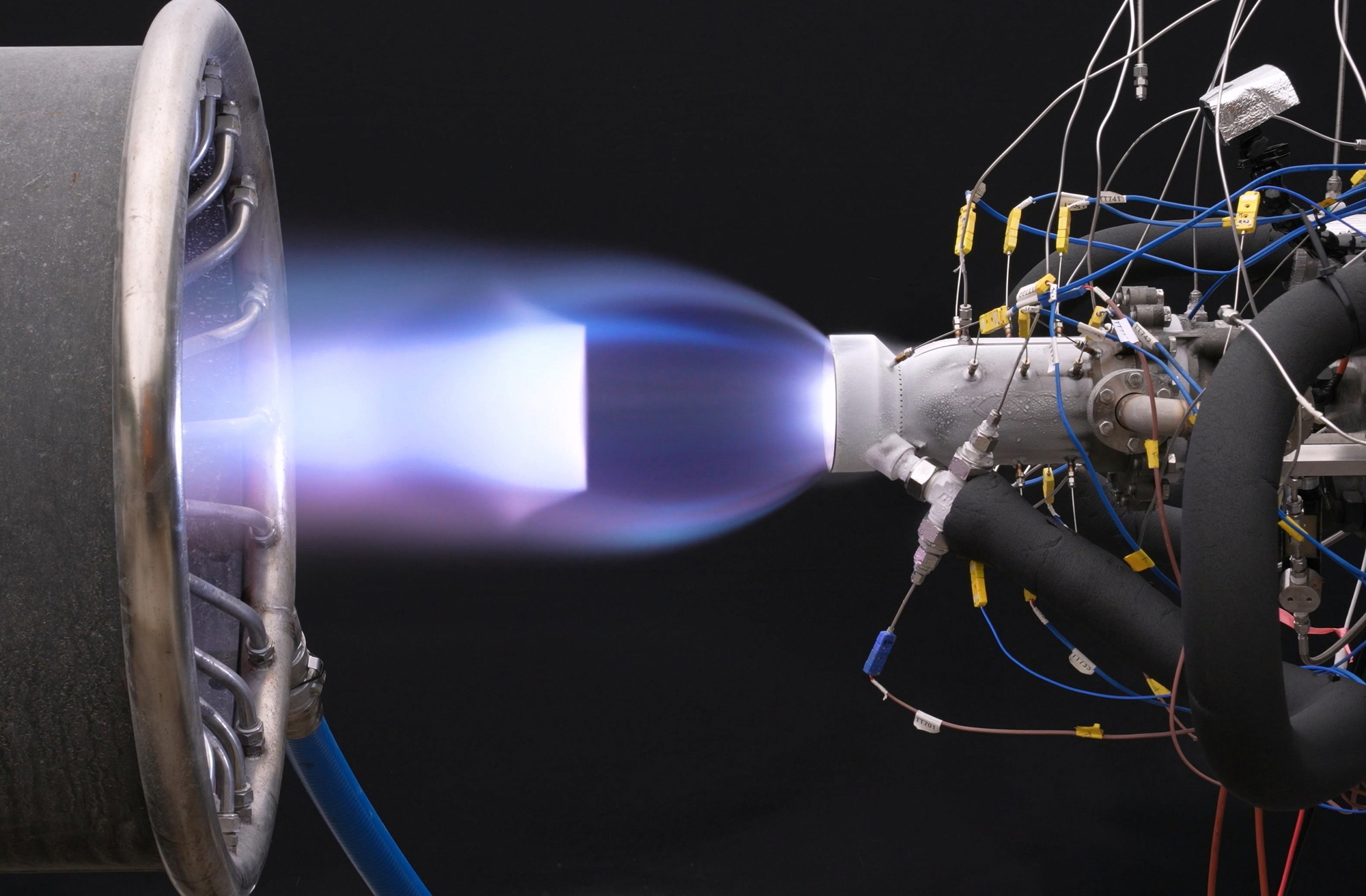
▲ INNOSPACE’s hot-fire tests on the 3-ton class methane thrust chamber assembly for the upper stage of ‘HANBIT-Nano’


 PREVIOUS