
INNOSPACE announced today that it has unveiled its multi-purpose suborbital rocket ‘SEBIT’ and is expanding its launch service portfolio to address a wider range of mission requirements.
● ‘SEBIT’, a multi-purpose suborbital rocket designed for a wide range of scientific experiments and technology validation
● Powered by a 3-ton-class hybrid rocket engine, capable of reaching altitudes over 50 km
● Expanding rocket lineup beyond satellite launch vehicles to include testing and technology validation platforms
INNOSPACE announced today that it has unveiled its multi-purpose suborbital rocket ‘SEBIT’ and is expanding its launch service portfolio to address a wider range of mission requirements.
Since its founding, INNOSPACE has secured competitiveness in the commercial space launch industry by providing low-cost and reliable launch services centered on satellite customers through its ‘HANBIT’ launch vehicle series, which incorporates hybrid and methane rocket engine technologies, building on the development of its small sounding rocket ‘BLACK BIRD’ based on hybrid rocket engine technology. The introduction of ‘SEBIT’ marks an expansion of the company’s rocket lineup to include testing and validation capabilities, enabling the development of a comprehensive service portfolio tailored to diverse mission requirements.
'SEBIT’ is a multi-purpose suborbital rocket developed to support a wide range of testing, validation, and research needs for the development of flight vehicles and space components.
It is designed to support a wide range of missions, including microgravity simulation, functional testing of scientific payloads and space components, and technology validation in high-speed and high-altitude environments. The rocket is equipped with a 3-ton-class hybrid rocket engine, which is environmentally friendly and well-suited for mass production and providing diverse flight conditions, enabling it to achieve flight performance at altitudes of over 50 km. During flight, real-time transmission of position and payload data to the ground enables continuous monitoring of flight status.
INNOSPACE plans to conduct its maiden flight test this coming July at the Alcântara Space Center in Brazil, where it will comprehensively verify performance and operational stability to support the commercialization of ‘SEBIT’.
Through ‘SEBIT,’ INNOSPACE has established an integrated business structure that spans launch vehicle development and sales, testing and evaluation services, and launch services for satellites and high-altitude payloads. The company plans to continue expanding its business by strengthening its lineup of “mission-based rockets” capable of supporting a wide range of mission requirements.
“Demand for transportation platforms using flight vehicles is rapidly expanding beyond satellite launches to include technology validation and experimental applications in high-speed, high-altitude, and high-maneuvering environments,” said Soojong Kim, Founder and CEO of INNOSPACE. “With the newly introduced ‘SEBIT’ rocket, we will address the rapidly growing and diversifying demand across both the space and defense sectors.”
“INNOSPACE will continue to provide high-value integrated solutions that meet customer needs through ongoing R&D based on proprietary space technologies and evolve into a space platform company capable of addressing a wide range of demands across the space technology ecosystem.” He added.
Meanwhile, regarding the first commercial launch mission of ‘HANBIT-Nano’ conducted in December last year, INNOSPACE has identified the cause of the mission termination through a joint investigation with Brazil’s Aeronautical Accidents Investigation and Prevention Center (CENIPA) and is currently implementing component improvements and process enhancements. Based on these efforts, the company plans to proceed with a follow-up launch within the third quarter of this year after obtaining launch authorization from the Korea AeroSpace Administration (KASA).
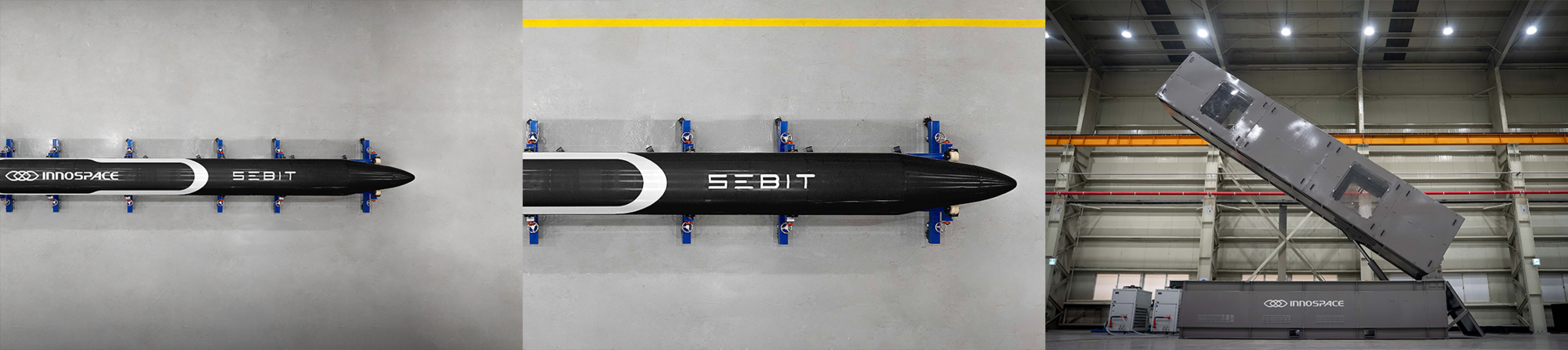
▲INNOSPACE’s multi-purpose suborbital rocket “SEBIT” and its dedicated launch pad
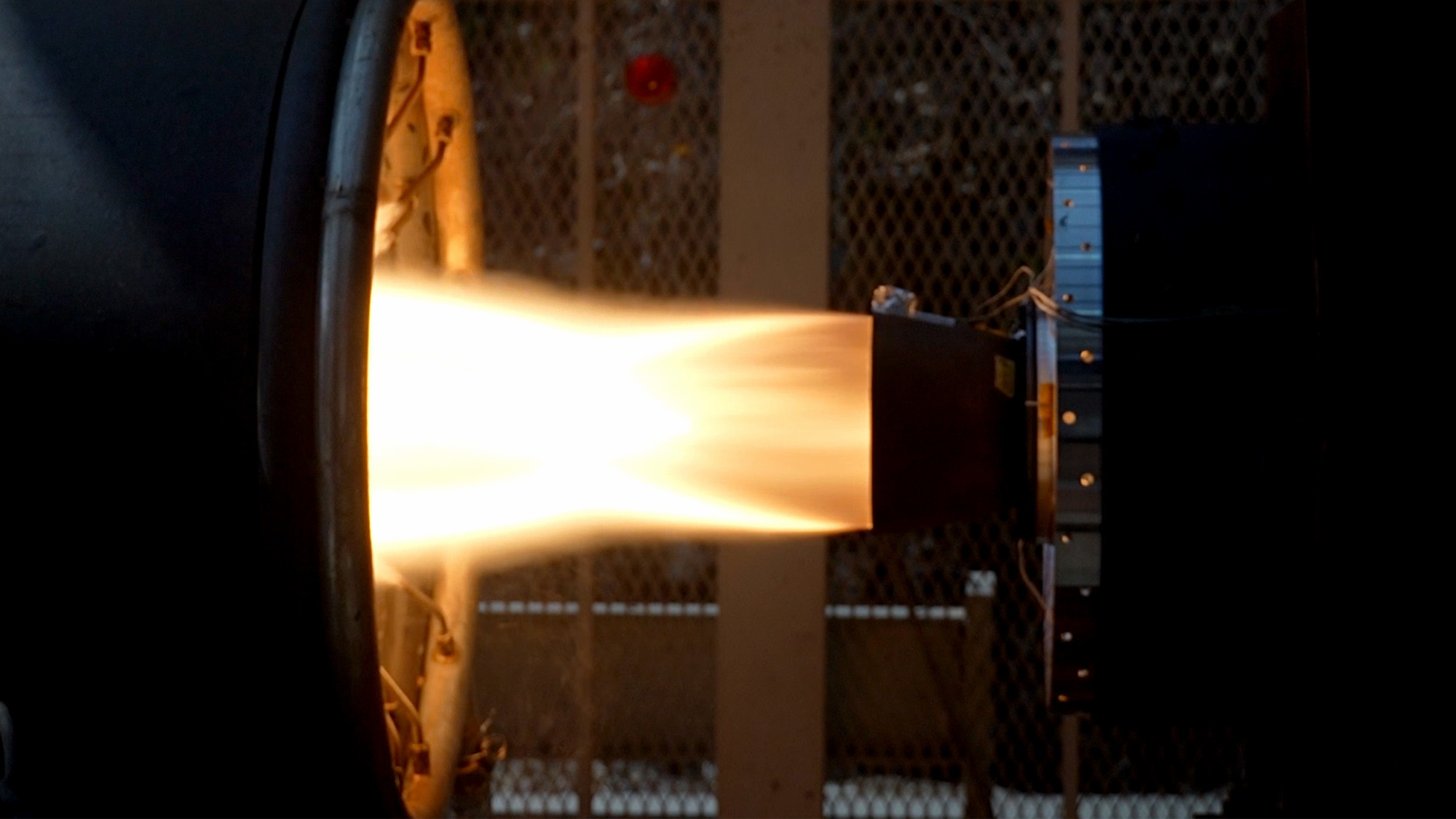
▲“SEBIT” 3-ton-class hybrid rocket propulsion system ground combustion test


 PREVIOUS